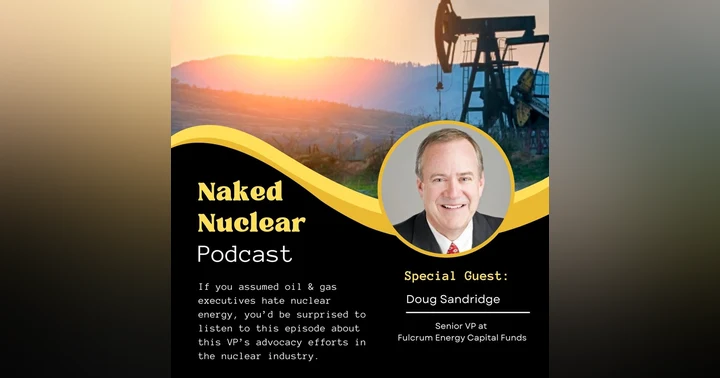
Landman for Landback: Challenging the Perception of Oil & Gas in the Nuclear Industry


 RSS Feed
 Naked Nuclear Explores: Land Back Movement and Nuclear Advocacy with Doug SandridgeIn this episode of Naked Nuclear, the discussion pivots to the intersections between the Land Back movement and nuclear energy advocacy. Danielle and guest Doug Sandridge, Vice President of Fulcrum Energy Captial Funds, with 49 years in the oil and gas industry and now a nuclear advocate, delve into his evolving stance toward nuclear energy and efforts to save the Diablo Canyon Power Plant.
They explore how indigenous tribes, particularly the ytt (Northern Chumash), strive to reclaim their ancestral land in San Luis Obispo, California, amidst political and environmental challenges. Details from Doug's Substack articles on the ytt tribe's ongoing struggle highlight these themes.00:27 Real Life Landman and Oil Industry Insights01:55 Nuclear Advocacy Journey06:58 Land Back Movement and YTT Tribe11:31 Historical Context and Diablo Canyon14:46 Tribe's Efforts to Reclaim Land19:04 Intersection of Advocacy and Land Back20:34 Current Challenges and Future Hopes28:22 Rapid Fire Questions with Doug32:47 Conclusion and Season Preview
And if you thought part 1 was great... Here's part 2
How to support ytt and their efforts
Full Transcript
[00:03:27] Danielle Allen: Alrighty. Cool. Um, let's break it down. Okay. Hello everyone and welcome to another episode of Naked Nuclear. I'm here with Doug Sandridge and what today we're gonna be kind of delving in a little bit deeper into a topic that we covered previously with Ryan Pickering on the YTT Tribe. kind of what's going on within the nuclear energy space with, um, their relationship with Native Americans, um, in the United States. So Doug has a phenomenal background. Um, he is the vice President of Focal Energy Capital Funds. He works in the oil and gas industry, and he told me a little bit of a funny story about how he got into advocacy. Um, but overhearing at a meeting that, you know, oil and gas hates nuclear energy. I think what was fascinating about that was Doug decided that he was going to step out and show that no, um, this industry does not hate nuclear energy and in fact, our, our, our advocates of it. So I'm excited to have Doug on the show today. He's got an immense, um, really cool background in history and, and so, uh, thank you so much, Doug, for, for joining the show. And would you like Kiera to kind of show, share a little bit about that story, about how you got into, into this space?
[00:04:38] Douglas C Sandridge: Well, that's kind of interesting that, uh, you, you interviewed Ryan Pickering about this because, uh, I have, I. I've, I've, I've always been a, a supporter of nuclear energy. Um, but I've worked in the oil and gas industry for 49 years, and you just don't have time necessarily to advocate for other people's industry.
You know, when you have a 60 hour a week job, you have your own family, your wife and three kids, you, you're pretty well locked in to, to take just taking care of yourself and your family. Uh, but after my kids were grown, I. Uh, and off on their own. Uh, I had more time and I started to get more interested in nuclear advocacy.
And it's kind of interesting because, um, I, I, I didn't know really know how to start on it, but I got, I, I don't wanna use the word radicalize, but I sort of was radicalized when they sold, uh, I mean when they closed the Indian Point nuclear power plant in, um, New York. And when that happened, I just thought this was the silliest thing I'd ever heard of.
You have, uh, political leaders, uh, environmentalists advocating for, uh, lowering carbon emissions and for a state like New York to gratuitously shut down Indian Point Nuclear power plant, which. Provided 25% of New York City's electricity, but a large percentage of their clean electricity seemed insanity.
I mean, the low hanging fruit is, let's at least keep the existing nuclear power plants going as long as they're safe. And Indian Point was safe, reliable, providing low carbon electricity at a very affordable price, and I just was outraged by that. So that's how I got reengaged in Nuclear, uh, back in 2021.
And I, I was brought into some advocacy groups, including the Save Diablo Canyon Group, and that's, um, uh, but it's kind of funny. I don't know if you know Mark Nelson, but he's a, you know, great advocate for all things nuclear, and he invited me to Berlin. To in the fall of 2021 to go to a rally in support of nuclear energy, because Germany was shutting down their last six nuclear power plants, and they wanted to bring an international presence there to kinda shame the Germans for making this silly decision.
And so I agreed. I thought, you know what the heck I am, I, I, I showed up in, in, uh, bur Berlin. And I'm, I'm getting to a point here, there's a point to this story, uh, but I didn't know anyone. I, I had been working in with these groups in nuclear advocacy from afar on Zoom calls for, for months, but I'd never met anyone in person.
So when they told me to show up in Berlin, I. I wasn't sure who I was looking for, and they said to meet at the corner of this street and this street at seven o'clock. I thought, no big deal. I'll show up at the corner of those two streets and it'll be easy. Well, of course, the corner of the two streets, they told me to show up.
There was thousands of people because it was right at a Christmas market in November at the Christmas season, and oh my gosh, I thought, how am I gonna ever find the group I'm with? I don't even know what they look like or anything. And I saw this goofball over on the corner. He looked like, uh, he was a Liberty insurance.
Uh, no, a tax service guy doing flips and throwing things and, you know, acting kind of goofy. And it turns out it was Ryan Pickering throwing out. Um. Flyers about nuclear energy. And so I looked at him and I said, that must be one of our groups. So to be, to be funny. It's kind of funny that you mentioned that you just recently, uh, interviewed Ryan because Ryan was the first person in nuclear advocacy that I actually met in person.
[00:06:56] Danielle Allen: That's cool. That's really cool. Um,
[00:06:58] Douglas C Sandridge: um, but anyway, so, so here you go. So, uh, I got into a nuclear advocacy and I thought, you know, where can I be the most effective? I'm a 49 year veteran of the oil and gas industry. It is a common misperception that the oil and gas industry hates nuclear, and I. I'm not sure where this came from and I've explored this in some of my writings, on my sub.
I have a sub stack, um, and I've written extensively about, you know, the history of the oil and gas industry and their relationship with, with nuclear. And you'd be surprised when you actually study and you do the, the, the work, how supportive the oil and gas industry has been historically of nuclear, uh, it was actually Kerr McGee, which was an Oklahoma oil and gas company that built one of the first nuclear fuel rod facilities in the country.
It was Karen Silkwood, which you may have heard of, Karen Silkwood was the, um, I think it was either a union advocate or, or someone who was, uh, monitoring quality control at that facility. Uh, that blew the whistle on safety problems, and they made a movie out of that with, uh, Meryl Streep, I believe.
But, but the bottom line is, uh, no, it's actually, if you look at it, the oil and gas industry historically has been very supportive. Uh, whether it be through, uh, the early, early nuclear industry and the oil and gas companies provided a lot of uranium exploration and mining. They also provided a lot of drilling of wells for waste disposal.
They also, uh, there was, um, project plowshare, which was a joint effort between the oil and gas industry and the nuclear industry to use nuclear bombs to fracture gas formations, to produce natural gas, and they, they tried it. Uh, it just didn't get, uh, a viable commercial product due to the, uh, natural gas being slightly irradiated, but, Uh, historically there's been much more overlap and cooperation between the oil and gas industry and the nuclear industry than most people realize.
And so, uh, what I decided is, let me be the face of the oil and gas industry and nuclear advocacy and let people know that, no, we are, we are allies and friends of nuclear and we want more nuclear in this country. And that's the position I've sort of carved out. And in doing so, I've found great, uh, you know, a lot of common ground with, with other advocates, including Ryan Pickering.
And so, you know, here we are. Uh, I've, I've now been advocating for nuclear energy for, for four years and I love it. I've had a great time.
[00:09:43] Danielle Allen: So I wanna focus on something really important. I think it ties into something called the Land Back Movement. Now we had Ryan on the show, as I mentioned, and we talked about the y tribe and what's happening in San Luis Obispo. But I wanted to bring this to you because you've done a series of articles.
I think they're three or four now on your sub stack, which are incredibly detailed and well researched, and. You lay it all out. I'm going to link these in the show notes people. These are incredibly important articles. And so what I wanted to do was have you come and share your research and your perspective.
So for people who don't know, uh, the YTT Tribe or the Ytribe or the Northern Chumash Tribe, um, they're out in San Luis Obispo. They're in the process of trying to be federally recognized. Um, they are an important component, in my mind, to the nuclear energy story. And Diablo Canyon, which is in their, what they consider or claim to be their ancestral homeland, uh, what can you tell us about what's going on there?
[00:10:52] Douglas C Sandridge: Well, and thank you for, uh, recognizing the articles. They are very detailed. And a few people have asked me, you know, who pays you? Why do you do this? And, uh, I always laugh and say, it's a hobby. It's like building model airplanes. It, it, uh, other people, you know, fish or whatever. I, I write about nuclear energy and, and the ytt tribe.
Uh, so this is a, this is a, you know, complex story and to sort of make it simple, here's my view. I got into this. Through Diablo Canyon, which is a nuclear power plant on the central coast of California. It's, it's actually an amazing nuclear power plant. It's still operating. It went online in 1985.
There's two units there. Each unit produces 1100 megawatts. So in total, 2,200 megawatts. It is California's single largest source of, uh, clean electricity. It produces about 8% of California's electricity alone, 15% of its clean electricity, uh, no carbon emissions. It is an incredible national asset. And PG&E which owns the plant, attempted to shut it down starting back in about 2016.
And a bunch of nuclear advocates, uh, led a campaign to save the Diablo Canyon Power plant. People like Ryan Pickering, uh, Heather Hoff, who started the organization Mothers for Nuclear. She was actually a female nuclear engineer who was working at the plant. And, and she was sort of the canary in the coal mine.
She said, Hey, wait a minute, they're, they're gonna shut down this nuclear power plant. We need to fight for this. And so she launched this campaign, mothers for Nuclear, and, and really led the way. And in order to, um, so Diablo Canyon was at risk and a lot of nuclear advocates got together to save the plant.
The Diablo Canyon Coalition, which Ryan Pickering is a member of the Mothers of Nuclear. They, they managed to get the state of California to at least extend the, the life of the plant for another five years. And, uh, it, it is, um, uh, and they're still working on a 20 year extension. So the fight is not over.
The fight goes on. But it was through the Diablo Canyon advocacy that I got exposed, uh, to the YTTI Tribe because there is a Chumash. Uh, clan, I, I'll call 'em a clan for now, but they call themselves a tribe in San Luis Obispo County, which is where Diablo Canyon is located. And the Diablo Canyon Power Plant sits on what the Ytt Chumash say is their ancestral territory.
And they have made two claims. Their first claim was that they are a legitimate tribe. Uh, and they were pursuing federal recognition from the, the Bureau of Indian Affairs. And the second claim is that they want Diablo Canyon to be shut down and, and their ancestral land returned to them. And this is the concept that you started the interview with, which is the concept of land back.
And land back is an interesting concept because it's, um, it's a movement among indigenous people, both here in the United States and globally, that indigenous people who. Claim to have occupied land for, for hundreds, if not thousands of years, feel like, uh, they should be recognized for this and some of that land at least should be restored to their custody or at least managed under their supervision.
And so that's kind of the, the simple version of what we're looking at here. There's a number of issues buried within that, and I've written four long articles on all of those topics.
[00:14:44] Danielle Allen: You know, because I, I, I wanna stick on it because I, I feel like this is, to me, one of the most important things to look at as a case study for the nuclear industry is what's happening here with this tribe, because not only. Is it something that is an active topic for people who are looking into, into land back, but I want people to also understand on the other side of that is when you actually start reading those articles and, you know, we had Ryan share a lot of his experience, you know, kind of being on the ground there, what was interesting about it is.
You know, I mentioned this briefly, but I do want to cover it, is that the, the, the YTT tribe is seeking federal recognition and, and within a lot of your articles you talk about, you know, the evidence of whether or not they are eligible for, for that, or, or, um. You know, what, what is going on, what are some of the, the, the flags that, that you saw while you were doing research into this?
[00:15:45] Douglas C Sandridge: Well, that's a, that's a great question. And, um, I, I wanna be careful here because as, as you know, I'm not Native American, uh, I have no claim to being Native American. I'm just a person who, uh, cares about Diablo Canyon because I feel like it's a national asset that is critical to, uh, providing clean electricity for the state of California.
And through a Diablo canyon advocacy, I encountered. These land back and tribal recognition issues that, that affected the Diablo Canyon situation. And I felt it was my role to research those issues thoroughly so that people could at least consider a balanced opinion. And the way I wrote, I, I spent months researching these topics and I feel like I've done a pretty good job of putting together the facts as best I can.
People can read the articles and decide for themselves. I would say that probably the, the most critical issue, and I hope no one's offended by what I'm about to say, but I, I think it's an honest assessment. The, the biggest issue facing the Ytt Chumash tribe. Is whether or not their claim to be a legitimate tribe holds up to the standards that are required by the Bureau of Indian Affairs.
And I'll get a, as I understand, and I'm not a lawyer, I'm, I'm not, I'm not a Bureau of Indian Affairs guy, I'm an oil and gas guy. Uh, and a nuclear advocate. But as I understand the process, there is a fairly rigorous process for recognizing a tribe. The Bureau of Indian Affairs has specific criteria that have to be met, and, and one of the key criteria is that the, the tribe needs to have been continuously governed as a community since 1900, uh, meaning that there is documented evidence of continuous tribal governance dating from. Uh, at, at a minimum 1900 to the present.
And the, the YTT tribe was, I'll call it organized, um, in around 2017. And there are questions about whether they have documentation, uh, that is consistent with the BIA's requirements. Uh, it's also important to note that the, the, the claim of ancestral territory, um, is not without its critics even among the Chumash.
The, there are other Chumash bands, uh, and groups that. Have questioned the ytt's claim to, uh, to specific territory. And so, uh, you know, it's a, it's a complex situation. It's not unlike, um, a lot of the, the tribal, uh, issues that you see across the United States. And, and I think it's a very important case study for the nuclear industry.
And I'll tell you why. And this gets right to the heart of it. If. A, a, a tribe or a group claiming to be a tribe can effectively use land back claims to shut down critical energy infrastructure. That is a precedent that could affect nuclear power plants across the country, and it could affect other energy infrastructure as well.
And so I think people need to pay attention to what's happening in San Luis Obispo with the y Chumash and Diablo Canyon because the precedent that's set there. Could have far-reaching implications.
[00:19:04] Danielle Allen: Well, and especially when you have, you know, hundreds of other tribes that are pending recognition, currently in the United States. One thing I wanna point out about one of your articles, and I thought this was, this was for me, was the most important thing that I took away, was that you know, when you're advocating for a tribe to receive federal recognition and also asking for critical infrastructure to be removed in exchange, um, it complicates things.
And I think as you alluded to, it creates a precedent for, uh, or, or the attempt to create a precedent where, you know, if, if this, this was to go through, then it, it, it could be applied in other places. So it, it'll be fascinating to watch this, uh, going forward. Was there anything else you found that was particularly interesting or that you wanted to share from, from those articles? Because again, they, they're incredibly detailed and I know there's. So much more in there than, than what we can cover in, in an episode.
[00:20:04] Douglas C Sandridge: Yeah. Yeah. No, I would just encourage people to, to read the articles. Uh, the first article is, uh, PG and E's Amelioration for the YTT Northern Chumash Tribe Part one, and that was published on my sub in, I think it was April of, um, 2024. And then the second one, part two, came out shortly thereafter.
Uh, the third article was about, um, the Chumash Heritage National Marine Sanctuary, which is another issue involving the, the Chumash and the coastal area near Diablo Canyon. And, and the fourth article, which I just published recently, uh, addresses some of the more recent developments, uh, including the, the political dynamics around the, the 20 year extension of Diablo Canyon.
And there are some very interesting political dynamics, uh, involving the state of California, the federal government, uh, and various advocacy groups. And so I, I just encourage people to, to read the articles and form their own opinions. But I think the, the key takeaway is that, um, the intersection of indigenous rights, energy policy, and, and, uh, environmental policy is a, is a very complex. Area and, uh, and one that deserves thoughtful consideration.
[00:21:17] Danielle Allen: Okay, well let's transition real quick. So for, for people listening or, or watching, we're gonna transition and move into the rapid fire portion. These, I, I love this because we always get to know, uh, the guests a little bit better. Um, so there's a few questions I had for you and they're just kind of fun.
Uh, first one, what's your favorite thing about the oil and gas industry?
[00:21:43] Douglas C Sandridge: Oh, that's easy. The people. The people, the oil and gas industry is full of brilliant, hardworking, innovative people who, uh, who genuinely care about providing affordable, reliable energy for the world. And I, I think that's, uh, that's the thing I love most about the industry. It's, it's the people and their dedication.
[00:22:03] Danielle Allen: What's your least favorite thing about the oil and gas industry?
[00:22:08] Douglas C Sandridge: Uh, probably the, the perception, the, the, you know, the, the negative perception that, that the public has of the oil and gas industry. I think there are a lot of people who don't understand. How critical oil and gas is to, to modern life. I mean, it's not just fuel. It's, uh, petrochemicals, it's plastics, it's, it's medicines, it's, um, it's, it, it touches everything in our lives.
And I think the negative perception is, is unfortunate because the, the people in the industry really are dedicated to, to providing a product that, that improves people's lives. And I, I think that, uh, the negative perception sometimes is, is hard to deal with.
[00:22:49] Danielle Allen: What's your favorite nuclear power plant?
[00:22:52] Douglas C Sandridge: Diablo Canyon, without question. I, I, I mean, it's, it's, uh, it's on the most beautiful stretch of coastline in the United States. Uh, it's, it's an incredible facility. It's been running safely for, for almost 40 years. Uh, it produces an enormous amount of clean electricity for the state of California.
It's a, it's a national treasure and, and I, I just, um, I think Diablo Canyon is, is, is the most important nuclear power plant in the country right now because of the fight to save it. And, and everything that fight represents for the broader nuclear industry.
[00:23:29] Danielle Allen: If you could have dinner with any historical figure, who would it be?
[00:23:34] Douglas C Sandridge: Oh, that's a great question. Um, I would say, uh, Theodore Roosevelt. Teddy Roosevelt was, was a fascinating individual. He was, uh, you know, a conservationist, a, a warrior, a, a statesman, an author. Um, he was, he was a man of incredible energy and, and intellect. And I, I think having dinner with Teddy Roosevelt would be, would be an amazing experience. He, he'd probably dominate the conversation, but that would be okay because he'd have fascinating things to say.
[00:24:08] Danielle Allen: What's one thing you wish more people knew about nuclear energy?
[00:24:14] Douglas C Sandridge: I wish more people knew how safe it is. I mean, nuclear energy is, is statistically one of the safest forms of energy production in the world. The, the number of fatalities per unit of energy produced, uh, for nuclear is, is extraordinarily low. Lower than, than wind, lower than solar, lower than natural gas, much lower than coal.
And, and yet the perception is that nuclear energy is dangerous. And I think that perception was formed by, you know, events like Three Mile Island, Chernobyl, and Fukushima. But when you actually look at the data, uh, nuclear energy is, is remarkably safe. And I wish more people understood that.
[00:24:54] Danielle Allen: What's the most surprising thing you learned in your research about the YTT tribe?
[00:25:01] Douglas C Sandridge: Uh, that's a great question. I think the most surprising thing was, was the complexity of the, the Chumash, uh, tribal structure in general. You know, the, the Chumash are not a monolithic group. There are multiple bands, multiple clans, uh, and they don't all agree on everything.
And I, I think that was surprising to me because, you know, as, as an outsider, you tend to think of a, of a tribe as a, as a unified entity. But, uh, the reality is that there are, there are different factions, different groups within the Chumash, uh, community who have different views on, on land back, on Diablo Canyon, on, on federal recognition.
And so the, the complexity of that was, was probably the most surprising thing.
[00:25:42] Danielle Allen: What's one book everyone should read?
[00:25:47] Douglas C Sandridge: Oh gosh. Uh, I, I, I would say, uh, the book that, that probably had the most influence on me is, uh, it's called the Prize, uh, by Daniel Yergin, and it's a, it's a history of the oil industry. And I, I know that sounds like a, an oil and gas guy recommending an oil and gas book.
But the Prize is, is really a history of the 20th century told through the lens of, of oil and energy. And, and it's a fascinating book. Uh, Daniel Yergin is an incredible writer and, and researcher. And the book, uh, you know, won the Pulitzer Prize. It's, it's, it's a masterpiece. And I, I think anyone who wants to understand, um. The modern world and, and the role that energy has played in shaping the modern world should read the prize.
[00:26:36] Danielle Allen: What's your, what's your hot take on something in the energy industry right now? Give me a hot take.
[00:26:44] Douglas C Sandridge: My hot take is that, uh, the, the data center boom is going to be the thing that saves the nuclear industry in this country. Uh, I, I think the demand for electricity from data centers, from AI, from, from cloud computing. It is going to be so enormous that, uh, there, there's simply no way to meet that demand without nuclear. And I think the tech companies understand that. And I think you're already seeing, you know, Microsoft, Google, Amazon, they're all making deals with, with nuclear companies. And I think that's going to be the catalyst for a, a nuclear renaissance in this country. And I'm, I'm very optimistic about that.
[00:27:23] Danielle Allen: Love it. Last question. Where can people find you?
[00:27:28] Douglas C Sandridge: Uh, you can find me on sub stack. My sub stack is, uh, Douglas C Sandridge, and it's, it's all one word, Douglas C Sandridge on sub. And you can also find me on, uh, Twitter or X, whatever we're calling it these days, uh, same handle, Douglas C Sandridge. And, uh, I'm, I'm on LinkedIn as well. So those are the three, three best places to find me.
[00:27:52] Danielle Allen: Awesome. I did want to cover, there were a few more things, um, actually, before we do wrap up. One thing I wanted to touch base on is, um, talking about the relationship between, uh, PG&E and the YTT tribe. Can you go into that a little bit? Because I feel like that's something that's really important for people to understand.
[00:28:14] Douglas C Sandridge: Yeah, absolutely. So, uh, PG&E, uh, which is Pacific Gas and Electric, which is the, the utility that owns and operates Diablo Canyon, has had a, a complicated relationship with the ytt, uh, Chumash. Uh, and, and here's why it's complicated. Uh, PG&E. Has in the past, uh, made certain, uh, I'll call them ameliorative gestures toward the, the YTT Chumash.
They have, uh, provided some funding. They have, uh, recognized, uh, you know, cultural heritage sites on, on, uh, near the, the power plant. And there are some who would argue that PG&E has done this because it's the right thing to do, and I, I respect that argument. But there are others who argue that PG&E has done this in part because, uh, they wanted to have a, a, a. A friendly relationship with the, the ytt, uh, in order to smooth the path for shutting down Diablo Canyon.
And this is a, a controversial claim, but there, there's some evidence to suggest that, uh, PG&E. Was, was using its relationship with the YTT Chumash as part of a broader strategy to, to wind down the, the power plant. And there are people, including some nuclear advocates, who feel like. PG&E was essentially, uh, supporting the YTT Chumash in order to create, uh, political and, and social cover for shutting down the plant.
And so, uh, it's, it's a complicated situation and I, I, I don't want to, uh, oversimplify it, but I think it's important for people to understand that the relationship between PG&E and the YTT Chumash is, is not as straightforward as, as it might appear on the surface.
[00:30:07] Danielle Allen: And I think that's where it's, it's so important that people read your articles because you have the footnotes, you have the sources, you have the documentation, and. You know, to your point, it's not simple, but you do a really good job of laying out the evidence and letting people decide for themselves.
And I think that's, that's what journalism should be. Even, even as a hobbyist, that's, that's really what we need more of in, in this space. Um, so, uh, one thing I wanted to ask you about is the Chumash Heritage National Marine Sanctuary. Can you explain what that is and why it's relevant?
[00:30:42] Douglas C Sandridge: Yeah, so the, the Chumash Heritage National Marine Sanctuary is a, is a large marine protected area off the coast of, of Central California, and it was designated by the Biden administration. Uh, and the, the Chumash Heritage National Marine Sanctuary is, is relevant to Diablo Canyon because. Uh, a marine sanctuary near Diablo Canyon could potentially affect the, the plant's operations, particularly its use of ocean water for cooling.
And there are, there are those who believe that the, the creation of the sanctuary was, was in part motivated by a, a desire to, um, create additional regulatory hurdles for the continued operation of Diablo Canyon. And so, uh, it, it ties into the broader story of, of the efforts to, to either save or shut down Diablo Canyon.
Uh, and I, I wrote about this in, in my third article, and it's, it's a, it's an important piece of the puzzle because it, it shows how, how environmental regulation and, and indigenous rights and energy policy all intersect. And, and sometimes. Sometimes these things are used, uh, strategically by, by different parties to, to advance their, their particular agendas.
And I, I'm not saying that's necessarily, uh, nefarious, but I, I think it's important for people to understand that, that these, these issues don't exist in isolation. They, they, they all interact and affect each other.
[00:32:07] Danielle Allen: Yeah, I think that was really well put, and it does go into that. The, the, you know, who, who's, who's at the table? Who's leading the conversation? You know, what's the, the ultimate goal? Um, and it's, it's a good lesson for advocates, not just in nuclear, but in any field, to pay attention to the broader picture and not just the, the narrow issue that, that you're focused on because, uh, there, there's, there's a lot of, of moving parts. So, uh, Doug, thank you so much for taking the time to talk with us today. The articles are phenomenal. Um, I know you're working on more, um, and, and I just really appreciate your dedication to, uh, to research and, and advocacy and, and the oil and gas industry showing up for nuclear. It's, it's huge.
[00:32:55] Douglas C Sandridge: Well, thank you, Danielle. And, and, uh, I, I want you to know that, uh, I think what you're doing with Naked Nuclear is, is amazing and I'm a huge fan. And, and let me tell you, uh, what, uh, how I would summarize everything.
You know, the, the whole point of my research and my articles is to bring transparency and factual analysis to these complex issues. And I think that's, uh, that's something that, that the nuclear industry needs more of. And, uh, I'm gonna keep writing and I'm gonna keep advocating. And, uh, I hope your listeners, uh, will follow along and, and engage with these topics because they are important.
And the bottom line is, Diablo Canyon needs to be saved. It's a, it's a critical piece of, of America's clean energy infrastructure. And, and whether, you know, whatever your views are on, on land back or tribal recognition, I think most people can agree that shutting down a perfectly safe, reliable nuclear power plant that produces an enormous amount of clean electricity is not the right answer to, to these complex questions.
And so I, I hope people will, will engage with the issues and, and help, uh, advocate for the continued operation of Diablo Canyon.
[00:34:09] Danielle Allen: Absolutely. And I think too, just, you know, I do wanna plug the YTT tribe. It is, it is important, um, that people do continue to learn about Indigenous rights and the, uh, different tribes across the, the nation and, and their, their history and their culture, because there is a, a depth of knowledge and, and history there that, that I think is, is really important.
And so, you know, regardless of, of where you land on the nuclear issue, um, learning about these communities is, is valuable. So, you know, there's links in the show notes for that as well. Um, but yeah, with that, Doug, thank you again. And, uh, everyone, thank you for tuning in.
This is, uh, a really, I think, important topic and, and one that I wanted to make sure we covered in depth. Uh, next season we're gonna have some really exciting topics. We've got some great guests lined up. Um, we're going to be digging into, uh, the workforce side of things, which is, is near and dear to my heart.
We're gonna be talking about what it actually takes to build a nuclear power plant from a workforce development perspective. So, uh, stay tuned for that. And, um, in the meantime, check out Doug's articles on sub, check out the links to the ytt tribe. Um, and, uh, you know, keep, keep learning, keep advocating, and, uh, we'll see you next time on Naked Nuclear.
[01:02:34] Douglas C Sandridge: Well, thank you Danielle. I, I, I'm, I'm excited about the, uh, new season and I, and I love the topic of workforce development because I, I think that's, uh, you know, there's a. A lot of people in the oil and gas industry who have skills that are directly transferable to the nuclear industry.
And I think there's a, a great opportunity for, for people in the oil and gas industry to, to, to transition into nuclear if they choose to. And I, I think that workforce development is, is going to be one of the critical issues, uh, for the nuclear renaissance that I think is, is coming.
So, uh, I'm looking forward to, to hearing more about that. And, and again, thank you for having me on the show. It's been a pleasure.
[01:03:10] Danielle Allen: Absolutely. And I think you bring up a great point because the, the, the overlap between oil and gas and nuclear from a workforce perspective is, is significant. And that's something we're going to dive deep into. So, you know, people who are, are in the oil and gas industry right now and maybe curious about nuclear, uh, stay tuned because we're gonna have some really practical, uh, conversations about that.
Um, and, and just, you know, Doug, I, I have to say, you know, when I first came across your articles, I was, I was blown away by the depth and the quality of the research. And the fact that you do this as a hobby, I mean, that, that speaks to your passion and your dedication. And I think that's, that's what makes the nuclear advocacy community so special is that you have people like you who are willing to put in the time and the effort. To, to educate and, and to advocate and, and to do it with integrity. So, um, thank you for that. And, uh, I know our listeners are gonna love reading your articles and, and following your work.
[01:04:09] Douglas C Sandridge: Well, I, I appreciate that Danielle, and I, I, I would say this is, this is a, a team effort. Uh, nuclear advocacy is, is not something that any one person does alone. Uh, it's a community of people who care about clean energy, who care about the environment, who care about the future. And, and I'm just one small part of that community.
And I, I think the more people we can bring into the conversation, the better. And, uh, you know, shows like yours, Naked Nuclear, are, are critical to that because you, you bring these topics to a, to a broader audience. And, and I, I think that's, uh, that's invaluable.
So keep doing what you're doing. Uh, I, I know it's a lot of work to, to put together a podcast and, and, uh, you know, organize these conversations. But, uh, it makes a difference. And, and I, I appreciate you having me on.
[01:04:55] Danielle Allen: Well, and that, that means a lot coming from you, Doug, because, you know, you've been in the industry for 49 years. So to have that, uh, that validation from, from someone with your experience is, is really meaningful. And, uh, you know, I, I, I, I hope that, uh, you know, we can continue to collaborate and, and, uh, bring more of these stories to light because I think that's, that's what it's all about.
You know, it's about telling the stories of the people and the places and the, the science and the technology that, that make, uh, nuclear energy so important. And, uh, and doing it in a way that's accessible and, and engaging. So, um, thank you again, Doug. And, uh, everyone, thanks for, for tuning in. We'll see you next time.
[01:05:32] Douglas C Sandridge: All right. Thank you, Danielle. Take care.
[01:05:35] Danielle Allen: All right. Good stuff. Good stuff. Um, okay. No, I mean, that was great. Uh, I love how comprehensive it was and, and. It's just, uh, you know, it's, it's going to be, people are going to love reading your articles. I, I, I really do encourage everyone to check out the substack. Um, and it's, it's one of those things where, you know, you, you hear about these topics in passing, but when you actually sit down and read the deep dive, it's, it's a whole different level of understanding.
So, uh, thank you again for, for taking the time and, and sharing all of this with us. It's been a great conversation.
[01:06:07] Douglas C Sandridge: Oh, well, thank you, Danielle. And you know, the, the, the thing I love about doing these articles and these interviews is that I, I learn something new every time. You know, even after writing four articles on this topic, I feel like I've just scratched the surface. There's so much more to learn about the Chumash, about land back, about the intersection of energy policy and indigenous rights.
And, and so, um, I'm just gonna keep, keep doing this and, and hopefully, uh, contributing to a, a better understanding of these, these complex issues. So thank you for providing the platform and, uh, for having such a, a great audience who cares about these things. Um, and yeah, let's, let's keep it going.
[01:06:18] Douglas C Sandridge: anyway.
[01:06:19] Danielle Allen: Great stuff. Thank you again for, you know, hopping on writing these articles as a hobby. It's just, it still blows my mind. Um, they're so well done. We're gonna link all of them into the show notes so people can, can subscribe to your substack and, and then really understand, you know, the level and depth that you go into is so critical within journalism, which is amazing.
Um, and just, just being a fascinating individual who goes after things that, that, you know, inspire them or, you know. Are, are interesting. So thank you again for joining the episode and, and sharing all of the wisdom that you've learned, um, and then looking forward to this new article as well.
[01:06:54] Douglas C Sandridge: Well, you're a fascinating individual and one of the most fascinating young people I've met in a long time. So thank you for reaching out to me and grabbing me. I know you're gonna do great things, um, with your, with your life going forward, and I can't wait to see what you're able to do, so.
[01:07:09] Danielle Allen: awesome. Thank you. All right.
**Naked Nuclear** strips down nuclear energy so it actually makes sense. New episodes weekly. 🎙️ [Listen on Apple Podcasts](https://podcasts.apple.com/us/podcast/id1781924674) · [Watch on YouTube](https://www.youtube.com/@TheNakedNuclearPodcast) 💡 Curious about nuclear careers? Visit [nakednuclear.com](https://www.nakednuclear.com) for episodes, resources, and guest spotlights.