How to Build the Internet’s Best Nuclear Guide with Nick Touran



 RSS Feed
 What does it take to explain one of the most misunderstood technologies on Earth?
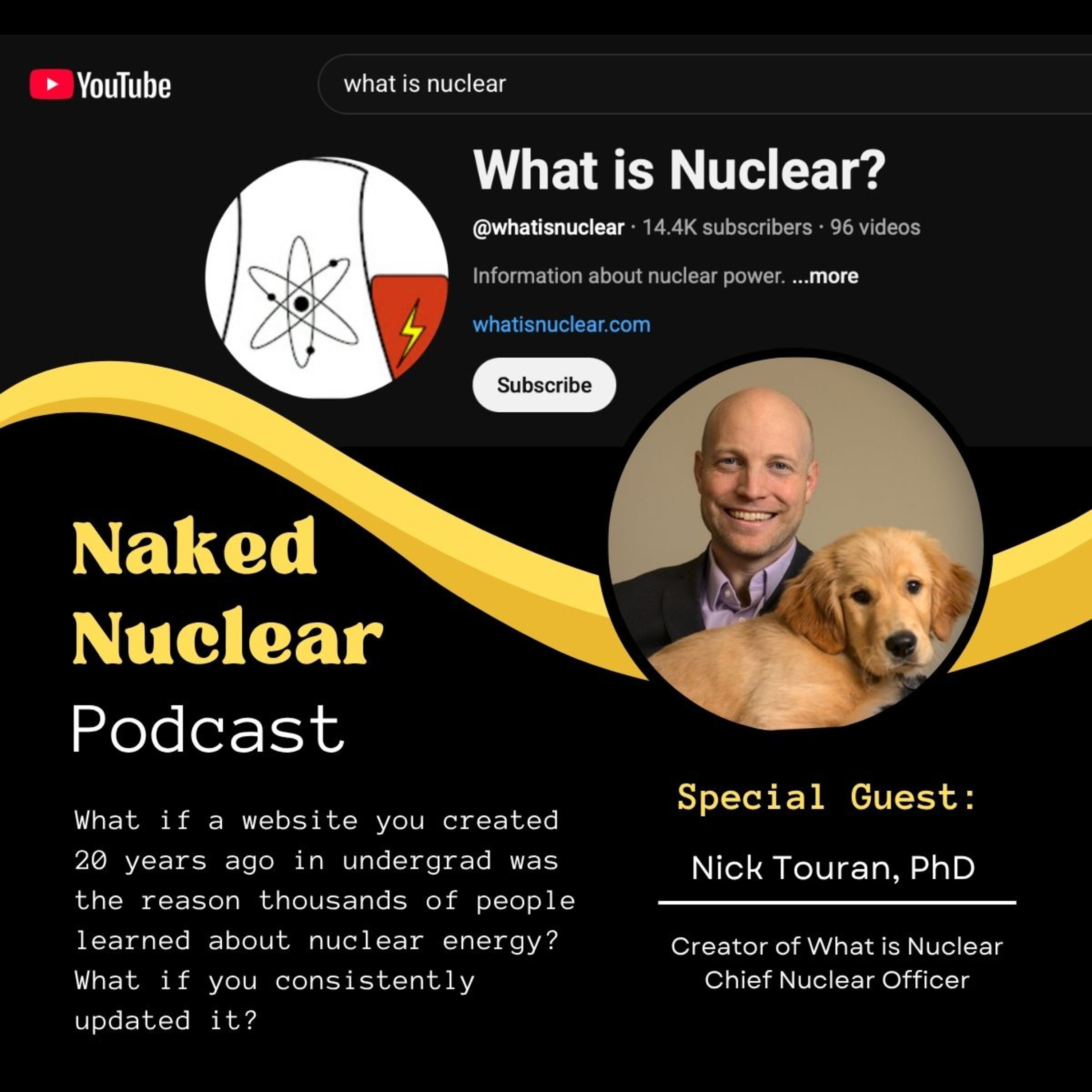
This Final Friday on Naked Nuclear, Danielle sits down with Nick Touran for a new Follow Them Friday episode.
Nick is the founder of What Is Nuclear, one of the internet’s most respected resources for understanding nuclear energy, reactor technology, fuel cycles, history, and policy in plain English. In a world drowning in hot takes and cold IQs, he built something useful.
We discuss Nick’s journey into nuclear engineering, how he built What Is Nuclear, why communication matters, and how advanced reactors differ through choices like coolants and moderators. We also get into regulation, licensing, innovation bottlenecks, and what may be next for nuclear in maritime applications.
If you’ve ever wanted nuclear explained clearly, or wondered where the industry is headed next, this is the episode.
- How Nick Touran got into nuclear engineering
- Why he created WhatIsNuclear.com
- Explaining reactors simply: coolants, moderators, and design choices
- Fast reactors vs thermal reactors
- Why licensing and regulation shape innovation
- Nuclear power for maritime shipping and industrial use
- The future of advanced reactors
- Why good science communication matters more than ever
Nick is helping lead a new maritime nuclear venture focused on the future of clean shipping and advanced nuclear deployment.
They’re seeking exceptional talent, including:
- Licensing Engineers
- Reactor Engineers
- Nuclear Scientists
- Regulatory Experts
- Advanced Reactor Talent
To be considered, complete the qualified candidate form here:
Check out Nick's Youtube Page here:
**Naked Nuclear** strips down nuclear energy so it actually makes sense. New episodes weekly. 🎙️ [Listen on Apple Podcasts](https://podcasts.apple.com/us/podcast/id1781924674) · [Watch on YouTube](https://www.youtube.com/@TheNakedNuclearPodcast) 💡 Curious about nuclear careers? Visit [nakednuclear.com](https://www.nakednuclear.com) for episodes, resources, and guest spotlights.How to Build the Internet’s Best Nuclear Guide with Nick Touran
Danielle Allen: Welcome back to Naked Nuclear and another edition of Follow Them Friday where the final Friday of every month, we spotlight people in nuclear worth your time, attention, and remaining brain cells.
Today's guest is Nick Touran founder of What is Nuclear, one of the Internet's first and best resources for understanding how nuclear energy actually works. Just clear explanation, reactor deep dives, history, policy, and the kind of educational content the broader energy world should have built years ago.
Nick's journey spans engineering, consulting, entrepreneurship, and science communication. In this episode, we talk about how he built the site, the future of advanced reactors, what coolants and moderators actually do, and why regulation matters if we want innovation to move faster than a glacier.
So I hope you enjoy this episode.
And welcome to another episode of Naked Nuclear. Today's series is a part of our larger series of who to follow in Nuclear. if you've ever gone on to YouTube or been browsing to the web and you type into your search browser, what is nuclear? You'll actually probably find a website called What is Nuclear? today's guest is Nick Turan PhD. He's got a nuclear engineering background. Licensed PE has been spent 15 years at TE Power and now advises the industry as well as creates amazing YouTube content, on historical, nuclear reactors and the history of nuclear. so thank you so much for joining us today, Nick, and I'm so glad to have you on the show.
Nick Touran: Yeah, Happy to be here. Thanks so much for having me.
Danielle Allen: so it was really funny. a few months back I was, we're connected on LinkedIn and I was listening and watching some of the content that you've created around, historical, nuclear, film.
Nick Touran: Mm.
Danielle Allen: I was like enthralled watching this. I was like, oh my gosh, this is so amazing. like on my couch, I was like sitting up. I'm like, this is really cool. so I just wanna know like, how did you get here? Like what was the story from like, you know, creating these, like from, you know, when were you interested in nuclear and why create this.
Nick Touran: So you want the whole story, like going way back to nuclear interest. Yeah.
Danielle Allen: bridge, A bridge version.
Nick Touran: I'll try to give the short version. I had interest in energy. I think I was kinda lucky to have something to kind of guide me when I was in high school. I was like, energy's important. There's energy shortage, there's climate change, there's all sorts of stuff. Even back when I was in high school, that was very interesting. So when I went off to engineering school, not knowing what to major in, I asked a peer advisor. Hey, I'm interested in energy, but I don't know what to major in. And she had said, well, have you tried our nuclear engineering department? I just happened to be at a university that had a nuclear department, one of the few, you know, university of Michigan. And I said, you know, no, I haven't thought of that. isn't nuclear kind of old and dumb and didn't we just shut our research reactor down and why would I do that? And she said, well, just take the introductory class and it'll fit this prerequisite anyway. And anyway, so I took the class and I fell in love with nuclear. I learned all these things, you know, all the things we know now about how cool and capable and what the potential is. Real star of my interest. And then, I started with Fusion and got into advanced fission and learned about sodium cooled fast reactors. And that led to my job at Terra Power. They basically called, I was in grad school, they were looking for people who were studying sodium cooled reactors. And like my research group was one of the few. So they called us up and they said, Hey, teach us a thing. So I went out there to Seattle as a grad student, as a consultant. And they put me in a nice hotel and that was a good 15 and a half year adventure there. but yeah, along the way this what is nuclear thing started, with my friends in undergrad. We were like, Hey, no one likes nuclear. It's too, it's so cool. And they just don't know. And when you Google it, they don't see anything positive. So let's make a website that'll solve this problem and we'll say, we'll teach people, you know, we'll make it plain language. It'll be written by nuclear engineering students, you know, the most trustworthy group of people. that was the start of the website. We wrote basic pages on what is nuclear waste and what are different types of reactors and so on. And then, as the years went on, my friends got other jobs and kind of got out of it. I still would just like write new pages as I was talking to people in the public or at doing presentations at high schools, questions came up all the time. And so I would write a page eventually, like, okay, what's the difference between sodium and molten salt? Like, those sound similar. Let's do a little page, or What's up with Orum? So we'd do a little page on that, and that was a big one for a while. So eventually I got into like history stuff and I started throwing a bunch of reactor history stuff on there as I got interested in it. And that's kind of what led eventually to the discovery of just like hundreds of old nuclear films sitting on, 16 millimeter reels in the national archives. And I found out how to get those digitized and just started throwing those up there. So that's kind of how that got started.
Danielle Allen: That's amazing. I love that you're just like, yeah, just casually got called up to the big leagues from Terror Power.
Nick Touran: Yeah, it was awesome.
Danielle Allen: feels like, some sort of baseball player just gets called up from the minors. Like, we are, we're gonna need this guy, right.
Nick Touran: no, it was just dumb luck. 'cause I mean, when we were doing the senior design project that nuclear engineering students do, like I really wanted to do the weird sodium cooled fast reactor option. And all my teammates were like, why would we do that? Like, that reactor's gonna be, no one's gonna build one of those. where would we get jobs? Like, none of these exist right now. And I was like, all right guys, I'll make a deal with you. I don't know why I wanted to do it so bad. I was like, I will learn the super obscure neutronics codes and you guys just have to do the thermal hydraulics and economics. And they're like, okay, you'll do all the new trials. I'm like, sure. So I like really dug in and learned these like super esoteric codes from like the sixties. This other, a grad student helped me do it. Eventually it just so happened, it was just again, luck that Bill Gates came along and wanted to do a sodium cooled fast tractor, and like everyone else had been thinking as my classmates did, like, why would we do that? So it was just luck. Lucky timing. Really?
Danielle Allen: Wow. Okay. That, that's amazing. You're like, I'll just do neutronics put the team on my back, like
Nick Touran: Yeah. And that carried my career. they were like, we need someone who knows these NEUTRONICS codes. And I was like, Ooh, I can do that. And I did that for many years. Yeah.
Danielle Allen: Oh my goodness. That's too funny. And so, okay, so then we're creating what is nuclear? 'cause there's nobody talking about this. We need good, you know, information on the site. I love the sources that you guys have on there. I guess like along the way, so you went from nuclear engineering students to then getting your PhD in the field. what was that process like in terms of trying to inform the public along the way as you're learning and the industry's learning as well?
Nick Touran: Yeah, it was interesting. I mean, certainly the overall public perception of nuclear, I think has changed pretty significantly since the early two thousands or mid two thousands, I guess, when we started the website. but yeah, so I mean, we were in Ann Arbor, and Ann Arbor is largely anti-nuclear, at least it was back then. And like we had a thing at one point, we just went out on the street and started with like a video camera, and we would like go up to people and be like, you know, an old school video camera with like tape. And we were like, you know, hey, can we interview about nuclear power? And they would be like, sure. And we'd say like, what do you think about nuclear? And everybody said they don't like it and they don't think it should be expanded or anything like that. It was pretty universal. So that was very interesting. but then occasionally, like people started seeming to get interested. I got a call from a Michigan radio, like an NPR station. I think a professor had referred them to me 'cause the professor didn't wanna do the interview. So I got a little bit of exposure and kind of the local radio media, which was kind of fun. And it just started building on itself to a degree, like with the site up, people started reaching out more and I got involved in doing, eventually someone would say like, Hey, I have a, my kid is in middle school and they're looking for people to give talks on like cool science topics. And so I started, I got involved through just through like friends parents and that kind of thing. The kids were really into it and then the teacher would be like, Hey, can you come back next year? Or like, Hey, my colleague wants like a similar talk. And so I think, 'cause it's kind of like a nichey thing, that most people don't know that much about, but it's like getting more and more interesting. There was quite a bit of demand that just sort of built on itself. And so I got to a point in Seattle, I mean, I was doing talks at coffee shops and breweries and schools and responding to emails all the time. So it really just ramped up, just interest came and people found me and asked me a bunch of questions and it got much more positive. Like in Seattle, it was also pretty anti-nuclear at first, but then it got to a point where like most of the people were really open and interested. There would always be someone who would say like, who's paying you to say all that? Like, you're trying to kill the planet. And then I got to a point where I was comfortable enough where I could kind of yell back in sort of an entertaining way and be like, well, I don't think killing 8 million people per year with air pollution is much better. and then the crowd would erupt in applause. That's my perception. I'm sure it was kind of like a few people clapping, but anyway, so that's kind of how it's gone so far.
Danielle Allen: Okay. Yeah, so like famous, heckling the hecklers. I enjoyed that as well. it is interesting, you know, kind of like watching the evolution of people's interests within the industry and topic itself. especially 'cause I think even nowadays, we really don't have a lot of K through 12 education in nuclear. So it's pretty foreign to a lot of people anyway. And so when they do find somebody who can kind of tell them in a way that they understand, they're like, Hey, I'm gonna refer that guy to all of my friends.
Nick Touran: It's hard to scale. I mean, there's Like a NS has tons of good material. they have slides that are pretty good slide decks and they have a whole, like boxes. You can even be like, Hey, NS I'm gonna do a talk at a school. And they like, send you a box of like, pretty cool, you know, stickers and little pamphlets and little simulated fuel pins and stuff like that. they have some good resources. Other outreach groups. like Generation Atomic has some pretty good stuff and they're training, they have a thing where they try to train people to be good advocates and they help, what resonates and stuff. I think there is a huge demand for it though. every time I did, like I was saying a talk at, as a science class, especially in high school, really, people were like, that was great. The students loved it. Like, please come back. So if people have kids or know someone who's in high school and can somehow go they're really reaching out for it. But if you can say like, Hey, does anyone wanna hear, you know, when's nuclear science week? Or when are you guys doing nuclear science? Do you want to talk? it can be really interesting and I think that the kids take it home and talk to their parents about it. I think it's very powerful.
Danielle Allen: That's awesome. Yeah, and I think the word of mouth is almost like every marketer's dream, like their product or their service or whatever they're doing somebody goes home and tells somebody else about it. I feel like that just kind of naturally happens with nuclear, which is also pretty cool. I think, you know, also, like the rise of YouTube is a big one. 'cause I think you were mentioning like thorium reactors and I know Ted Talks and Norman's like what about thorium?
Nick Touran: Yeah. Well, yeah, that was, so around that time, I mean, in 20 whatever, 13 or 14 thorium became like Fever pitch and I, that's when I started doing sort of what I call inReach instead of outreach to a point where I was like, there were people who were very pro-nuclear. Because of thorium and they were saying things and it was becoming, I mean, we were seeing big publications and major online platforms and instead of saying like, Hey, thorium is way better than uranium. It's much safer. There's much more of it. And it was only not developed because it couldn't make weapons. Like we made Lightwater reactors because we were gonna make weapons with them. None of this is true. It's not even remotely true. I mean, I was a big thorium fan for years, but when I started hearing people say stuff that was kind of overhyped. I wanted to push back a little bit and just, you know, I feel bad for the engineers who have to like say, oh, people found out I was a nuclear engineer. They're like, oh, are you doing thorium? Just people off the street. Everybody knew about thorium, which is, I mean, impressive in a way. But they had, yeah, over inflated expectations of like what it could be and why we weren't doing it. So anyway, I did a bunch of like push back and like correction on thorium and it made a big thorium myths page and tried to, I always kind of debated it. 'cause like what tends to happen is people learn about thorium, they're like, wow, nuclear is cool because of thorium. And then when they start digging into it more, they're like, actually nuclear is cool in general. And so it's sort of this feeder program into vene pro nuclear. So maybe I shouldn't, I don't want to go out and like poo p it too much because I don't wanna prevent that from happening. And people are smart. They'll figure it out eventually. But it's still kind of annoys me when people say things that are just like not quite historically accurate. But anyway, the thorium people got like mad at me. I got in like big fights with other pro-nuclear people. Yeah. Back in the day. Mostly on like Reddit
Danielle Allen: Yeah, subreddits are a little heated.
Nick Touran: for internet warrioring. Yeah, exactly. So you know, internet warrior warrioring out there, good times.
Danielle Allen: I mean the longevity, props to you, very impressive. But I think that's it. It is something that's really fascinating that I feel like I see nowadays as well is, you know, because people are kind of like, tell a friend, tell somebody else. it, nuclear almost gets this like, to this game of telephone where like the end message kind of gets a little bit garbled and you're like, oh, that's not quite right. and having to kind of course correct a bit as well. I feel like I hear things around like, SMR development where I'm like, oh, I don't necessarily know.
Nick Touran: And now, I mean, obviously there's a lot of excitement, there's a lot of hype associated with that, and there's potentially a lot of, inadvertent fraud, like people saying things like, oh, we solved all economic problems with nuclear. We're just gonna make little tiny reactors, and like everything will be solved. I wish they would say, and I know this isn't how capitalism works, I wish they would say like, we think there's a reason to believe that if you make 'em smaller, we could make 'em cheaper. And we are gonna find out by developing them, and we're gonna build a few, and we're gonna see if it works. But instead, they come up and say, like, everyone who's building big reactors doesn't know what they're doing. We're gonna build small reactors and it's gonna be a great solution. And it's like, you don't really know that, like you haven't built the reactor. Like, let's get to prototype first. So I am happy that now people are kind of done with talking and everybody is like, let's just build a reactor and look at it and see how well it actually performs. So I'm excited to get into that phase.
Danielle Allen: Yeah. And that's exciting 'cause Yeah, before this I was just chatting, 'cause I am not a finance person and so I'm always trying to learn from like the economic side. And I was literally chatting with the economic Person before this. And I'm like, tell me about the economy side. And my brain, I was like, I don't think my brain likes that. likes the physics. is easy for me. I was like, supply chain management of global different products and things,
Nick Touran: Yeah.
Danielle Allen: And so I guess that kind of was making me think about like when we're seeing like kind of this expansion of just different reactor types and advanced reactors. one of the things that I think, you know, that a lot of people are interested in is just understanding all the different types. and one of the things that I think was really helpful on your website is like when you're going into like reactors, like this lovely table of coolants moderators and it, you can go down it. and so for our guests that are maybe not super familiar with the reactor sides, what is a coolant? What is a moderator? How are they different from each other?
Nick Touran: Yeah. So, okay, they can be the same, but they don't have to be. That's one fun fact. a coolant, I think is the easiest to understand. When you're splitting atoms, you're releasing the nuclear energy as heat, and so you're just heating up the fuel and that heat is gonna start conducting outside of the fuel material and you have to. it would just keep increasing in temperature as you ran the reactor unless you pushed some kind of fluid by it to pick up the heat and carry it and transport it to the power conversion cycle. And that's where it turns the heat into electricity. So you can use lots of different materials. Usually it's a fluid, you can use a solid, but usually it's either a gas or a liquid. Obviously water is kind of the most common coolant right now. It's easy to heat up water. and it's easy to pump water. So those are kind of the two things that you need to be able to do. There are many other types of coolants, like liquid metals. So mercury was used as a coolant and the clementine reactor. Yeah, real early on. A strange one off. And then a much more commonly liquid metal sodium, which is just like mercury. It's not, don't think salt when you hear sodium, everyone thinks, you know, salt sodium. But actually there's like elemental liquid metal sodium, which is more like mercury. you can have liquid molten lead is another liquid metal that's been used a few times. And these all have different pros and cons. Like liquid metal is an excellent coolant. It conducts heat really well and it's easy to pump. and it doesn't go to high pressure when you heat it up. So with water, when you heat it up, it would boil unless you keep it under very high pressure. But with liquid metal. You can leave it at pretty low pressure and it doesn't boil until, so you can have a much sort of thinner walled system, but there's disadvantages, which are like liquid metals, burn when they touch water or air or concrete. So you have to, like, if there's a leak, it's a much bigger deal. and then you can have gases like helium or carbon dioxide or nitrogen. and you can have organic material like oil. There's oil and wax that have been used as coolant, And then it keeps going. You can get creative. there's like many different types of things that can and have been used as coolants. And then moderators are much more nuanced, and this is in the nuclear physics realm of things. A moderator's job is to slow down neutrons to improve the ability of the system to chain react with neutrons. So it's all about the neutron chain reaction when you split an atom. Neutrons come out moving really fast and they could go and find a new another uranium atom and split it. or they could leak outta the system, or they could get captured by another piece of fuel that doesn't fission. So it turns out we found out very early on in the early 1940s, they discovered that if you slow those neutrons down, in a separate material, so if you have like a fuel material and then a moderator material, that's job is to just slow neutrons down. You can get the chain reaction to react much, much easier with really natural uranium. This is how they did the first reactor before we had enrichment or anything. So the trick is. The neutron goes out of the fuel into this moderator and it basically slows down in peace. Okay? So it's slowing down by bouncing off light nuclides, whether it's carbon or hydrogen and water or whatever. It slows down. And as it slows down, there's nothing in that material that can capture neutrons. 'cause those materials only slow neutrons down, they don't capture them. Whereas if you slow down in the fuel, it's very likely that you're gonna captured by uranium 2 38, which is actually a pretty big neutron absorber. the trick is to slow it down over the moderator and then let it come back into the fuel as a very slow neutron, at which point the likelihood is that it will get captured in a U2 35 Adam and cause the next vision. So anyway, so moderators make. You can run on much lower enriched fuel. If you get rid of a moderator, you need higher enrichment. You need hlu or beyond really to go critical with like a fast reactor. graphite is carbon. That's the early moderator. Then we did switch to water. Water can both cool and moderate at the same time, which is super nice. Water is actually a phenomenal moderator because those hydrogen atoms, if a neutron hits one, it slows down like all the way. So you can slow a neutron down in like five centimeters with water or it takes like 20 centimeters with graphite. So you can make a very small core, which is why we made pressurized water reactors for submarines 'cause they're very small and very compact. That's, those are the basics.
Danielle Allen: No, that, that's actually super helpful. 'cause I think a lot of the time, at least from the folks that we get questions on, on the show and on the podcast, if you're like recently getting into nuclear, 'cause nuclear's like the hot topic right now, you kind of step in and you look around and there's just like, everything happening all at once. people are like, salt, molten, salt, fluoride chloride. Like, I don't really know what's happening here. and I think it maybe sometimes gets overwhelming. So I think this is definitely one table that we can just be like, Hey, like we got our coolants here, Moderat is here, and water being, you know, the very simple but also kind of really cool that it can be both the cool and the moderator.
Nick Touran: You can also just use it as the coolant, like in the Hanford B reactor, it was just a little thin annulus of water was pumped through as the coolant, but then there was a bunch of graphite to slow it down so you can kind of mix and match it. that table's a lot of fun 'cause it just shows that there's like so many different combos. And then I try to put little hyperlinks to like if there was a beryllium moderated, sodium cooled reactor, like here's like that one that ever was, and here's a link to it, or something like that. So I've had a lot of fun and whenever I hear of a new one, which happens all the time, so I'm like, oh, here's a organic cooled heavy water moderated reactor. I have to go add it to the table. So I update that table all the time.
Danielle Allen: yeah, I love that as well. I think it is also fun for just like the historical brain in me to kind of just like go and hunt and be like, what have we done historically? because it gets weird and kind of fun, as well.
Nick Touran: Yeah. And I, not to jump back to the films, but like, that's one thing that I've really enjoyed these historical films for is because like, yeah, you can read about, or you hear about they built a reactor and here's a paper on it. But when you can see it in like a pretty professionally produced documentary style film that someone put some real effort into, it's somehow just more engaging. Like maybe I'm more of a visual learner, but I think, and it's also like more shareable and more accessible to more people. So I think a lot of those documentary films are just so well done and super interesting to see. Like, here we are, you know, here's the nuclear powered Savannah getting, you know, here's someone, smashing the champagne on it, christening it. here it is, here are people eating their dinners in it. And just being able to see it it's been really inspiring. It's like humbling. 'cause it's crazy what people have done in the past. And it's, I think it's good for people in the industry to watch some of that and be like, wow, we have some catch up to do. Because it was a pretty hot industry in the fifties and sixties. So I think those have been really fun.
Danielle Allen: Yeah, I think historically it's just so fascinating. learning about where we were. to me, like right now, we're kind of in the age of information we have just access to so much information, it's also sometimes like a little bit of a needle in a haystack, when you're trying to find something very specific. but when going back within this historical context, I think for me there's just so much more respect because like, they didn't have Google to be like, Hey, if we do X, Y, and Z, what's gonna happen? wasn't a thing. is there any, I guess what have been your wow moments as you've been going through some of these films? and pieces.
Nick Touran: Yeah, I mean there's so many, I'll try to think of a few. Like one thing I learned kind of going through is when we were doing these, there's a thing called a homogeneous, an aqueous homogeneous reactor, which is a fluid fueled reactor, not molten salt. It uses like a water solution with uranium dissolved in it. So it's this like tank. with complex flow patterns and with the fuel moving around inside, and they didn't have CFD, computational fluid dynamics. We run these big simulations now and, you know, you can click a button and it shows where all the flow's gonna be. So what they did, this like blew my mind. they had some kind of fluid called a milling yellow solution that somehow changes its optical properties if the fluid's under attention. And they built a thin plexiglass model of this vessel and they pump fluid through it and let it flow sort of as like an analog, Basically it's just a physical model and then they shine light through it and they take pictures and you can see these patterns in the picture that show where the flow patterns are and they were then able to adjust the shape until it had stable flow just like we would do on a CFD model. And then they went and built the thing out of, a big expensive zirconium vessel. It was really interesting to see. And then other fun things to see. We have big 3D models of buildings where we practice, figure out if, when we're installing something to make sure it fits well, Just huge. I don't know what scale it is, but the models are like this big in this massive room, like plastic models of the whole facility. And they're sitting there planning construction and planning maintenance operations with these guys, like playing with these, it's like a big dollhouse effectively, which I just thought that was kind of cool. even though we had a lot of these analog computers, they did also use some of the world's first digital computers to do reactor design. So there's some cool footage of people running a computer in the early 1950s doing a neutronics diffusion simulation of one of the early army micro reacts. And it's just like so many people say. We built these reactors of the slide rules. It's like, eh, not entirely. We actually ran like the world's first computer on that core as well. So those are just a few kind of fun things that come to mind. there's so much in there. sorry, one other thing that was just a real odd find is another one of those aqueous homogeneous reactors, like burned a hole in its vessel and dumped the core. it was like a hundred thousand Rankin per hour radiation in there. It was extremely radioactive. And they built these specialized tools and went down there with like a periscope and repaired it remotely from the top. And there's a whole film that just shows like the special tools they built and the process they went through to make that happen. And it's wild. It's, humbling and inspiring.
Danielle Allen: are awesome stories. I'm just like, still processing. 'cause I'm just like, wow. Like, but I think it's, it's so fun because like when you don't have, let's say like, you know, necessarily like, you know, we're talking about CFD when you don't have a computer to kind of like do that for you, it creates this like new sense of, you know, problem solving of it almost feels like really hardcore engineering because you're really trying to figure out like, how do we engineer this problem and try and go back and fix and try and see what we're doing here. let's just build a whole. Town models. Like, I'm just like, that's just wild to me. I'm like, yeah, look, we just playing it. We're just just building. yeah, I think, of the things that would be helpful, with sharing these is kind of seeing, the creativity around the industry of like, how do you kind of create, solutions when you don't necessarily have all the quote unquote fancy, you know, highest tech tools as, as you're using. and that to me is like pretty impressive overall.
Nick Touran: and I think it kind of helps. Maybe it'll help solve, like analysis paralysis. A lot of times engineers even, I've been guilty of this, want to like, no, we have to keep designing it until it like really performs well. Like at some point it's like, get out there and build something and, make it cheap and fast and iterate on it. Like that's a pretty good pathway. And I think that is aligned with what we're seeing on some of these high speed programs to build the first critical thing you can build. It's not gonna be a good reactor product at first, but maybe it gets you, what you need to learn really important hands-on lessons and then make fixes to get on a pathway to make an actually economical and easy to run reactor.
Danielle Allen: Yeah, I think, the assumptions part is like the assumptions of what it's in your head and you're assuming all these, if you haven't ever built it, like I almost think of like, wow, what ego you have to like, for me at least to think that all of my assumptions that I've created are gonna be right. And I'm like, I've not even built. and so I think, yeah, the idea of just getting out there and building it definitely humbles you a little bit. 'cause like you can get hung up on something so simple. that's always, you know, the nice thing about actually getting out and starting to build, 'cause always, a challenge when you know something very simple like, oh, the road is not big enough,
Nick Touran: Yes. Yes.
Danielle Allen: think about that.
Nick Touran: Yeah. Plans never survive their first encounter with reality. There's a quota though.
Danielle Allen: and so you kind of were mentioning how much you update the website, but then some of the things that you're doing now and we had chatted before this, and you'd kind of mentioned doing NRC surveys. as we're kind of shifting into, okay, now we're gonna start building all these advanced reactors, what does the regulation look like? What does the licensing look like for this? And so can you just kind of describe what that NRC license or survey was? Was about?
Nick Touran: Yeah. that was back in April. So there was like, all the rumors were flying, like the administration wants to streamline regulations, there's gonna be some executive orders. And so a few people got together and thought like, we should interview people across the industry and come up with a list of specific regulatory reforms that we think would be useful. there was a lot of like, the regulations are the problem, we need to fix regulations, but there wasn't a lot of talk about like, here's the specific changes that we think we wanna see. Now, to be fair, like some think tanks had put stuff out like that and there are policy nuclear policy people who do this professionally and really had done a good job sort of laying those out. we wanted to get a fresh list and make it available for whoever the people were who were building these executive orders and planning the regulatory reforms. updated information surveying people all across the industry from the operating plants to different startup companies, to national labs and other folks like that. I worked with ClearPath with a think tank in DC And went and interviewed a bunch of people and said like, Hey, if you could change any regulation, what would it be and why? And we came up with a. Top 10 list that I threw up on a post on what is nuclear in the blog post section. And then we also sent, through networks up to whoever, to who we thought might be, close to the decision makers making these executive orders, like not really knowing. And so, yeah, a lot of the results that came out that were commonly seen were things that had been said before that other policy groups, like, Adam Stein for instance, has all this stuff memorized and knows exactly what is needed. So he was, a lot of it he kind of already had. But yeah, there were some specific things. It was like continue streamlining the environmental review work and like the NRC interestingly already had. Recommended, they already have a plan to continue streamlining that work. It was, it's like a part, it's like a rule making that's been slowed down for a while. And so it's kind of like enable them to continue that thing that they're working, like they're on a path that was really good. And so like, make that, keep going. another one was there's some nuanced, sort of like in the weeds ones, there's something called the, the mandatory. Oh, now I have to get my list up. The, there's, there's, anyway, it's like there's hearings that have to happen by law that are not necessary. The uncontested mandatory hearing is an example, and it's like, why do that? It takes all this time and there's really no need to do it, so let's like push it through. There were a few other things that the NRC had made policy recommendations to have Congress go change the law so that would enable them to streamline certain things. And when that was first proposed, Congress was in no state and it was not pronuclear enough to go through with it. But like today, Congress is so pro-nuclear that you could just throw it up there and they'd be like, sure. Like ship it. So it's kind of like just bringing that kind of thing back up. another one that's kind of a fun one is when you build a new. Nuclear plant. There's regulatory guidance that says you have to have like a really tall meteorological tower in place for two years collecting weather data on that site before you can like start thinking about construction of a plant. So that like adds this two year delay to just get wind pattern data in case something goes wrong. And it's like, well these, that made sense in like the forties, but these days with like satellites and weather sensors all around, like why not just if there's enough like weather information recorded about an area. Then why not just analyze it and be like, yeah, that's good enough for what we need and not have to do the two years of Met Tower type stuff. So anyway, there's a few other things along those lines, but those are a few of the results that came out. So we sent those up the chain and then the executive orders came out and one of the big ones was reform regulation, reform the NRC. And that's still an ongoing process. And I'd like to think that like some of those things that we sort of reminded ourselves of, hopefully those got in front of the right people and we'll be doing something useful. I think like a big fear was like, well. If you just say, get rid of the NRC, a lot of the people in the industry who have applications being reviewed and like, are about to get approval and don't think the regulator is like their major critical path. they don't want that because it throws in all this uncertainty, it opens up tons of options for people to stop the process, to sue or to take away the liability protection like the taxpayers through Price Anderson, have provide a stop gap for a major nuclear accident. And if the NRC is gone, then why would the taxpayers. Keep providing liability insurance, like they're not going to. And so, I mean, and I wouldn't blame 'em. So you'd have to basically move all the regulators into private insurance companies and it's just gonna be like 20 years of confusion and slow things. So let's like find the things in regulatory space that are like clearly slow and clearly dumb and not need it, and let's like get those going first. And I think that's kind of what I hope, that's what we're moving towards now.
Danielle Allen: Nice. And I think it's nice that we talked about the historical, industry of nuclear and all of that, because it feels like a lot of. the regulations just are kind of stuck in the fifties a little bit. and just kind of getting that audit of like, Hey, we have satellites now this makes sense. we don't need to do that because we actually can get the data like some other,
Nick Touran: Yeah.
Danielle Allen: instead of, you know, just the overall hacking of the NRC. 'cause I think from a public perspective, it almost feels as if, you know, anytime you say like, get rid of a regulator, like the public is like, oh, and like pandemonium. there is a lot of misconception on the public side of what regulation is on the nuclear side, within the nuclear industry. I think there's a lot of like, oh my goodness, like what are you doing? But within the industry there's like, actually this doesn't make sense. We should like reform this. and so I think that's probably, you know, with that survey, being able to see what those are.
Nick Touran: Yeah. Another one was like, how many like force on forest drills you have to do at the operating plants. Like how many, like how much security theater do you really need? This is like an interesting question, and I mean, it's kind of interesting 'cause there is quite a lot. I mean, the idea that the regulator is the only problem and it's holding nuclear back, it's a very broadly, believed prospect right now. And in people in power in, in the political world and sort of just like across the populace. So like, not to like do a pushback on it, but like, I think there's this idea that now we, the nuclear is becoming so popular. They're like, well, nuclear is among the safest forms of energy we have, which is true. there's this question of how much of that is because we have very strict quality assurance, we have great standards, and we have a very, serious regulator, there's a possibility that nuclear's really only been able to perform so well because the industry got very serious and takes safety seriously and is well regulated. when you look back even in 1980 light water reactors capacity factor was like 60%. They were down for maintenance, and now it's 92% once you get really good at quality assurance, maybe quality goes up and maybe that high regulation is part of the reason we were able to get really good at operating plants very safely. And there certainly were a bunch of like near misses when you talk about the Browns ferry fire and the Salem anticipated transient without cra there's all these like, near miss issues that when you read 'em, you're like, you know, yikes. Like that they couldn't shut that reactor down for eight hours. Like, that's not good. and I'm kind of glad we have redundancy in fire protection systems and so on, Yeah, I don't want to get rid of regulations, but but again, there are certainly, there's plenty of things that could be done to make it more sort of appropriately regulated. Regulated in a way that doesn't kneecap the industry, but also doesn't just, let people run wild with a, you know, inherently there is, there like high radioactive material is hazardous. I don't call it dangerous 'cause we have it under control, but it is like something you have to respect and be careful with.
Danielle Allen: Yeah. And I think that's a good point of like the safety factor. just like reading about like the origins of nuclear history, every now and then I'm like, wow, they we're allowed to do that. Like, okay. it was that learning factor that we were like, oh, we learned through, sometimes some mistakes, to be able to be like, oh, we shouldn't do that anymore. And I think, within a lot of different industries, like, so I have background in aviation, so I get to fly and like, I remember when I was first flying, like my instructor was like, every single plaque on here is because somebody did something at one point where they needed to put that plaque on there. right, I was like, okay. And, you know, it's, it's very similar, with aerospace and like astronauts and things like and so like the safety isn't just like, we just kind of like on a whim we're like, let's just do that. It's usually 'cause somebody did something pretty stupid or sometimes even lethal that okay, let's walk back from there and really see how do we make this, appropriate for the future?
Nick Touran: Totally. Yeah.
Danielle Allen: think that's, it's exciting that, you know, that survey took place, but even just within the conversation of like, it can't just be the regulator that is a potential bottleneck. to me that is always kind of like a, I don't think so.
Nick Touran: No, I don't think it is near it. People say, oh, it took half a billion for new scale to get a license. And it's like, no, it took half a billion for new scale to do the engineering and design work to the level that you could, you know, first build the thing. And also by the way, get a license like those, the engineering needed to finalize the design of a plant and get a license is very overlapping. So it's not like all that money is just engineering development work. It's not because they had to do all the licensing things.
Danielle Allen: I think it kind of brings up the horizon for nuclear. I think right now we're seeing a lot of indicators within the industry that it's like, okay, we've got green lights coming from here and here and people are building and it's really exciting. and so from your perspective, what is exciting to you that you're seeing within the industry that you're like, oh, this is kind of fun. Like people are interested.
Nick Touran: yeah, there's a lot. There's so much going on. There's so much to be excited about. I think the restarts are super fun, you know, with all the Dwayne Arnold and Palisades and TMI coming back, or sorry, crane, coming back online. so like, that's the easiest thing for sure. And then, like these announcements that, like now there's talk about re finishing the plants at VC summer, which I no one expected even like months ago. So that's kind of awesome. and then, other plans, I am kind of happy that there's some re reviving interest in the large, in the large light water reactors. I have been an advanced reactor guy my whole life, but I've really come to respect the value of a large light water reactor that already has a license. We just built two in Georgia. Yes, they were over budget, but you can only have an incomplete design once. So like, there's no regulatory risk, there's no engineering design risk. It's just like a sighting and financing issue. And then, the advanced reactors that are the big projects like X Energy, kairos, and Tarot Power, I think are all making really super interesting progress. They all have major, licensing activities going on. The licensing's going well. Kairos got like three reactor test reactors approved, for construction. the Hermes and Hermes two, which is two reactors and Terra Power just got, indication that their environment report is looking good. so all my buddies back at Terra Power are doing great and they're gonna be, building these pretty interesting reactors out in Wyoming and X energy in Texas and so on. So that's all very cool. And then the, the like race to go critical for The micro reacts by, you know, nine months from now or eight months from now, is kind of, it's sort of funny. I at first thought it was pretty sort of a stunt. it's difficult to develop, to do the engineering required to make a good reactor, in eight months. But, I guess it doesn't have to be perfect. Like, I think it, they're like trying to rush and get something critical, does give an urgency and is like a fun competition I don't think they're gonna be commercially viable reactors at first, but hey, going critical and splitting atoms will give these folks hands-on experience. They'll get more hands-on experience with high radiation, with high temperature coolants and all that stuff is gonna help them more quickly encounter reality and start making the iterations that are necessitated by physical reality. So that stuff is all pretty exciting too. And I don't think it's impossible, like bringing in rich uranium critical, you know, isn't that hard. In fact, there's a whole profession criticality, safety engineers, they make sure that doesn't happen on accident, so it can't be that hard. So, I am excited to see, everybody kind of race to go critical, in the small reactor space as well.
Danielle Allen: Yeah, I mean, it kind of definitely goes back to, what we're. Talking about in the historical context of like, hey, sometimes you just gotta get out there and build something and see what fails and see what works and back to the lab and iterate again.
Nick Touran: Yeah. They didn't, yeah, they didn't usually say do it in nine months. It was usually like two years, but hey, let's get something going and then we'll iterate based on that. That's great.
Danielle Allen: yeah. I think that's, it's helpful kind of, at least, you know, even from like the outside perspective of, of like just the general public, to see like, wow, like this industry is like actually like really moving, you know, considering it always has this connotation of being like very slow and, bureaucratic and just a lot of paperwork. And I think now we're kind of seeing, you know, people kind of like, all right, we're gonna start accelerating and start moving a little bit faster than we
Nick Touran: yeah. Let's, let's get these reactors going. I really want to like people, I'm so sick of people talking about their cost estimates without having ever built a reactor. So I'm so excited to, for people to be able to say like, look, that reactor is running right now and it costs this much to build and it'll cost this much to operate The second one, it's like, great, I can make a decision based on that very real information, rather than kind of trying to say like, is this guy, are they, missing something or are they being more aggressive than the last people I talked to? It's like, everything's gonna get normalized by physical reality, and that's very exciting.
Danielle Allen: feels like reading tea leaves or like you just throw the bones up and you're like, well,
Nick Touran: And like it's impossible to know a reactor cost without operating. That's another thing that came up in these films in the history of things. There's a great story, like Alvin Weinberg wrote a autobiography in the nineties called The First Nuclear Era. It's like the best book. and he kind of talks about, it's pretty short, easy read, but very fascinating. And he tells stories about how, they thought for sure they had a super cheap reactor this time, but once they turned it on, all these things happened that they just totally didn't expect and it made it uneconomical. And so yet again, they learned that you cannot know the cost of your reactor and tell you have the full system up and running. Like that's just, that message is kind of hammered in and I really think it's true. So I'm glad we can like get back to that point.
Danielle Allen: Kind of like, you know, the talks with like paper reactors versus real reactors and of go on and on and on about like all the really cool things you can do with a paper reactor.
Nick Touran: Yep.
Danielle Allen: cool. what's it cost?
Nick Touran: And there's, yeah, there's this headline I keep referring to from 1988 in Fort St. Vr. The headline in the New York Times said, world's safest reactor is shutting down because it rarely runs It was a tricho fueled gas cooled reactor and it had so many maintenance problems that it just never was online. 'cause they're always fixing something. And so it just shut down forever. So like, even if you make the world's safest reactor, you may not be anywhere near an economical situation. It's very interesting and instructive.
Danielle Allen: Yeah, I think that's a helpful thing to keep in mind just for people understanding like safest doesn't necessarily mean that it's actually gonna be commercial, so,
Nick Touran: And that goes for fusion as well. Like fusion is kind of like our fuel will be free. I'm like, well, fusions fuels like 10% of the total cost. So even if it were free, like you still have like a big machine that you're operating and like you're gonna have tritium all over the place. Like there's like, who knows? Like I'm a hundred percent sure that fusion will eventually make net energy, but I'm like 0% sure that it will ever be economical. Like maybe, but like we just have no way of knowing.
Danielle Allen: Yeah, first we gotta get to the table.
Nick Touran: Yeah. Yeah.
Danielle Allen: so I think overall what's really fun, like about you and your story and just kind of the amount of public education, that you've been doing, is how do you balance all of that and like how do you kind of follow your interests? I think, it's one of those things that, you know, being able to kind of go on the website and kind of see all the things that you've produced and created, it's really easy for me to consume it and be like, alright, cool, next video. but there's a person behind it that's like, I actually creating all this stuff. that like for you?
Nick Touran: Well, first, yeah, in terms of creating the films that are being digitized, like I didn't create the, like, I'm just, I'm just getting them digitized and so much effort went into them and I feel like it's just a tiny effort on my part to get 'em digitized and put 'em online where so many more people can see 'em than have ever seen them. And so I've, I just feel like I'm kind of just lightly amplifying a thing that is the work of like hundreds of people who made those films. But more to your point, it takes a lot of time and I do it, it's sort of, it's a big hobby. I mean, I was working, you know, when you're working a full-time job and then you eat dinner and then you're like, oh, I guess I'll work on more nuclear stuff. Like for fun, it's kind of like, what are you doing? let's see. I think a part of it is like, and hopefully this won't change, but my wife is like very, she's like very intense worker. she's a physician and she works all the time we go on vacation and have fun and stuff, but a lot of the times, like she entertains herself. and I can entertain myself and I do like nuclear stuff as a hobby. We did just have, as you know, we have like a seven week old first child, so maybe everything will change. Maybe the website's dead now. But also like when people are like, Hey, you gotta watch this TV show, I'm usually like, no, because I wanna work on my website I mean, I'll watch TV shows, but I try to avoid, I'm definitely susceptible to like, getting hooked in and binge watching stuff. And I try like somewhat consciously to. Not do it too much, just 'cause I feel like it's somehow more fun or, I don't know, helpful to do the nuclear stuff. I mean, the truth is I enjoy it. Like I, I like that stuff. It's fun to read. I have the X account going where there's like 22,000 people who, whenever I find some, I'm just reading through old documents and I find a cool picture, screenshot it and throw it on X and like, you know, a bunch of people start talking about it and have fun with it. So it's sort of addicting in a sense. Like I think I've found a niche of people who are interested in this kind of thing and I can kind of. I throw stuff at the social medias and off they go. And when I put those videos up, you know, the one of them got 200,000 views, you know, which isn't a lot in YouTube space, but it's a lot for an old nuclear film,
Danielle Allen: not in the nuclear film phase.
Nick Touran: So it's kind of, fun. I like it. It's entertaining and I've been lucky to have time and space to work on it.
Danielle Allen: Yeah, that's awesome. I think, what's really funny right now is the idea of influencers and content creators is very catchy and trendy. talking to you, you created your own website. You did a lot of the code and I think you might've been one of the first content creators for nuclear energy. that's a kind of a fun,
Nick Touran: Yeah, it's a lot of text. It's a little old school, but yeah, rod Adams has me beat, rod Adams was doing his podcast, years before me. But yeah, I think we're pretty early on the overall list of people.
Danielle Allen: Okay. So the last kind of portion of the show is our rapid fire questions. Some of them are not, nuclear related. So the first one, do you have other hobbies of nuclear?
Nick Touran: I used to, when I just moved from Seattle a year ago I really love going out and doing day hikes and paddle boarding. I spent tons of time paddle boarding out on union, just getting outside and doing stuff like that. Since I moved, I haven't quite discovered as much outdoors, but also, this is a lame hobby, but hanging out with my dog, walking, playing, fetch with the dog, super fun and spending a ton of time at dog parks and getting to know people. my whole friend group in Seattle is dog park friends. we'd go to the bar afterwards. So, yeah, that kind of thing is, those are other hobbies, I guess.
Danielle Allen: I would say same. I have obviously, as you can are back here. What kind of dog do you have?
Nick Touran: A golden retriever named Waffles. She's downstairs. She sometimes comes in here, but
Danielle Allen: oh my gosh, I, I'm in love already. that's awesome. Okay, so next question. If you had to give a non-nuclear TED talk, what topic would it be about?
Nick Touran: Oh, a non nuclear Ted talk. wow. I'm like so invested in nuclear stuff. It would be about, a startup idea I had years ago called Neighbor Casting, which is like basically already even done. it's like Craigslist, but, you just, you can like go on a map and say like, I need to, does anyone have some sugar? And you go on a map and you like, draw us a radius for how far that would broadcast. You know, over the internet and then only people within that circle could like respond and reply. So it's like a somewhat localized, map driven form of Craigslist, which I think this has been made by now, but it's like really, you can then do, you could do like ride share where you're like, I need to go from this circle to this circle. Like, who's going? So that becomes like an Uber type of thing. And it just takes over like all sorts of cool internet things. I always thought that was like a fun, Ted talk, like startup request for startup.
Danielle Allen: I like that idea as well. 'cause I feel like there's so many times where I just need something very specific, but I don't wanna buy it myself. it once. It's like, yeah, it's,
Nick Touran: and for, yeah, like a tool share. Like, hey, I need this like special tool. I don't wanna buy it 'cause I'm only gonna use it one time. It's the same thing, like, and there's so many people, you know, we live in these dense areas, like there's, and I don't know, it just, yeah, totally.
Danielle Allen: do you have any type of favorite music that you listen to while working or just like in life?
Nick Touran: I have like a few different genres, pretty basic stuff. I listened to, old late nineties techno sometimes like when I'm working I can like zone out to that, like house music. From back in the day, I worked at a hardware store and there was this older guy who's probably like 25 when I was in high school, and he introduced me to this Techno stuff from back then. I just thought it was so cool and that's kind of carried over so I still can zone out to it. I like classic stuff like, you know, Tom Petty, I'll listen to that, the traveling Wilbury. I do have a list, Dua Lipa. I really like Dua Lipa,
Danielle Allen: Mm-hmm.
Nick Touran: so sort
Danielle Allen: nice.
Nick Touran: And these days it's like Pandora, whatever it's gonna play. It's pretty good. But I do have a, I like, have maintained my, I like still buy MP threes off Amazon and like, they're on my computer and I like play them through my house on this like networked thing. So I'm a little, it's like my generation, we were into like Napster and MP threes, but I like buy them now,
Danielle Allen: Yeah. Yeah. Yeah, I could see, I could visualize in my head the nineties techno. I feel like kind of a computer coder, early two thousands. Definitely listen into
Nick Touran: yeah. Totally. Yep. Yeah.
Danielle Allen: Right on. so this last one is kind of tricky. Can you give your best piece of advice in five words?
Nick Touran: Ooh. and this is advice to like young people or just anyone?
Danielle Allen: old Well, that they wanna hear from me.
Nick Touran: Okay. A specific interest can guide, specific interest can guide you
Danielle Allen: Okay. I like it. Specific interest can guide you.
Nick Touran: yeah. Or maybe like I should say general interest can guide you like. Okay. But the, what I'm, 'cause it's just five words
Danielle Allen: there's no rules.
Nick Touran: point being like, just having the fact that I was interested in energy was very helpful. I am interested in energy, like that really helped me make a lot of decisions easily. And I think there's no wrong decision. Like you can go on so many different paths, but just having something like that has been helpful to kind of help me choose some of the big decisions like going to college and choosing a major and that kind of thing.
Danielle Allen: Nice. Right on. I think that is helpful. 'cause like there's just all these different things, especially as a young person, you're like, whole entire world.
Nick Touran: you can get lost in it.
Danielle Allen: Lastly, so people who want to know more about you, I guess this is the who to follow in nuclear, they go to follow you?
Nick Touran: Yeah. So, Like I have, I have like all the socials and it's always like, what is nuclear or what is nuclear.com? So like, I have XI have blue sky, I have truth social, I have a Facebook. Yeah, I, I'm definitely most active on X. that's kind of been, that's been my COVID hobby. and then of course, what is nuclear.com? I try to throw, they're in the news section. It does have, like, I know no one uses RSS anymore. I wish they did, but there was a thing called Google Reader like 20 years ago, and it was awesome. And so I try to like make sure when I update the website that like you can get a notification from it, but really like X and blue sky and truth social. I sometimes if I do a big post, I kind of like just dump it on all three of those. X is where I like, am having most of my conversations and stuff.
Danielle Allen: A huge thank you to Nick Touran for joining us today and for the work he's doing to make nuclear energy understandable, accessible, and a little less mysterious than humans insist on making it. You can follow Nick and explore his incredible library of resources whatisnuclear.com if you're a student career switcher investor, policy nerd, or just gloriously curious, it's worth your time. And if you enjoyed this episode, share it with a Friend, leave a review and subscribe to Naked Nuclear for more conversations with the people shaping the future of energy. Until next time, stay curious.